
Easy pistachio halva
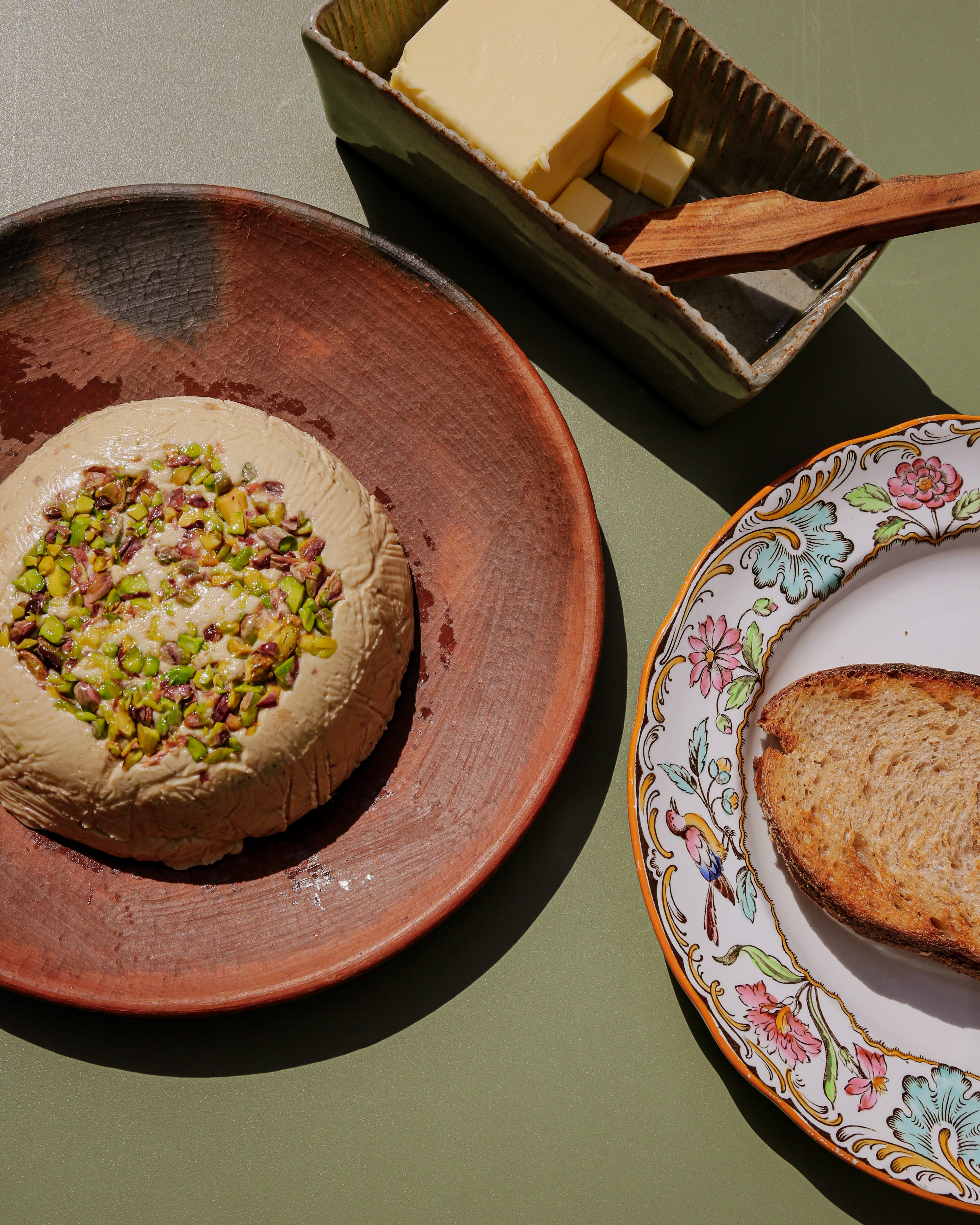
The simplest halva I know how to make and one of the most satisfying.

The simplest halva I know how to make and one of the most satisfying.
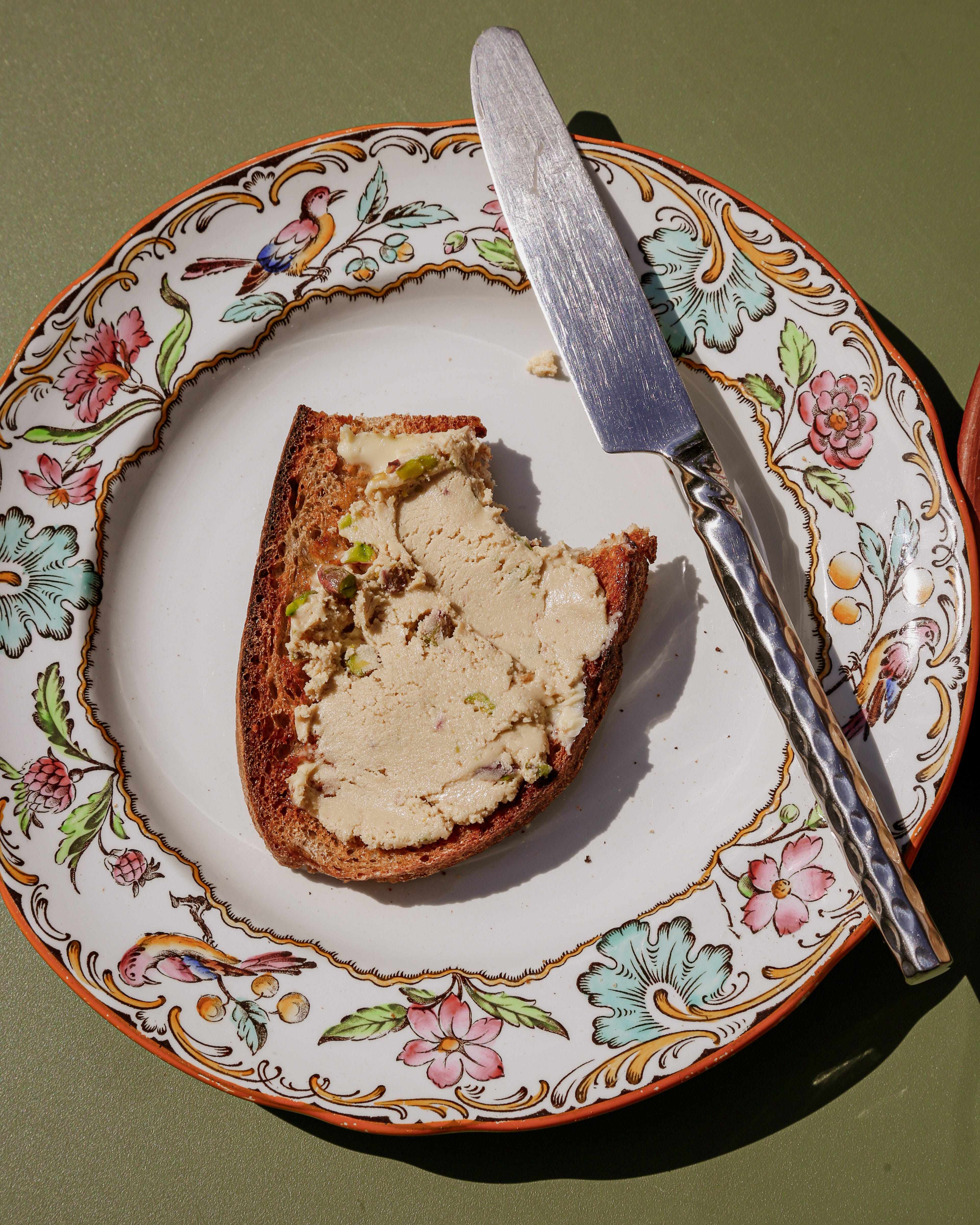
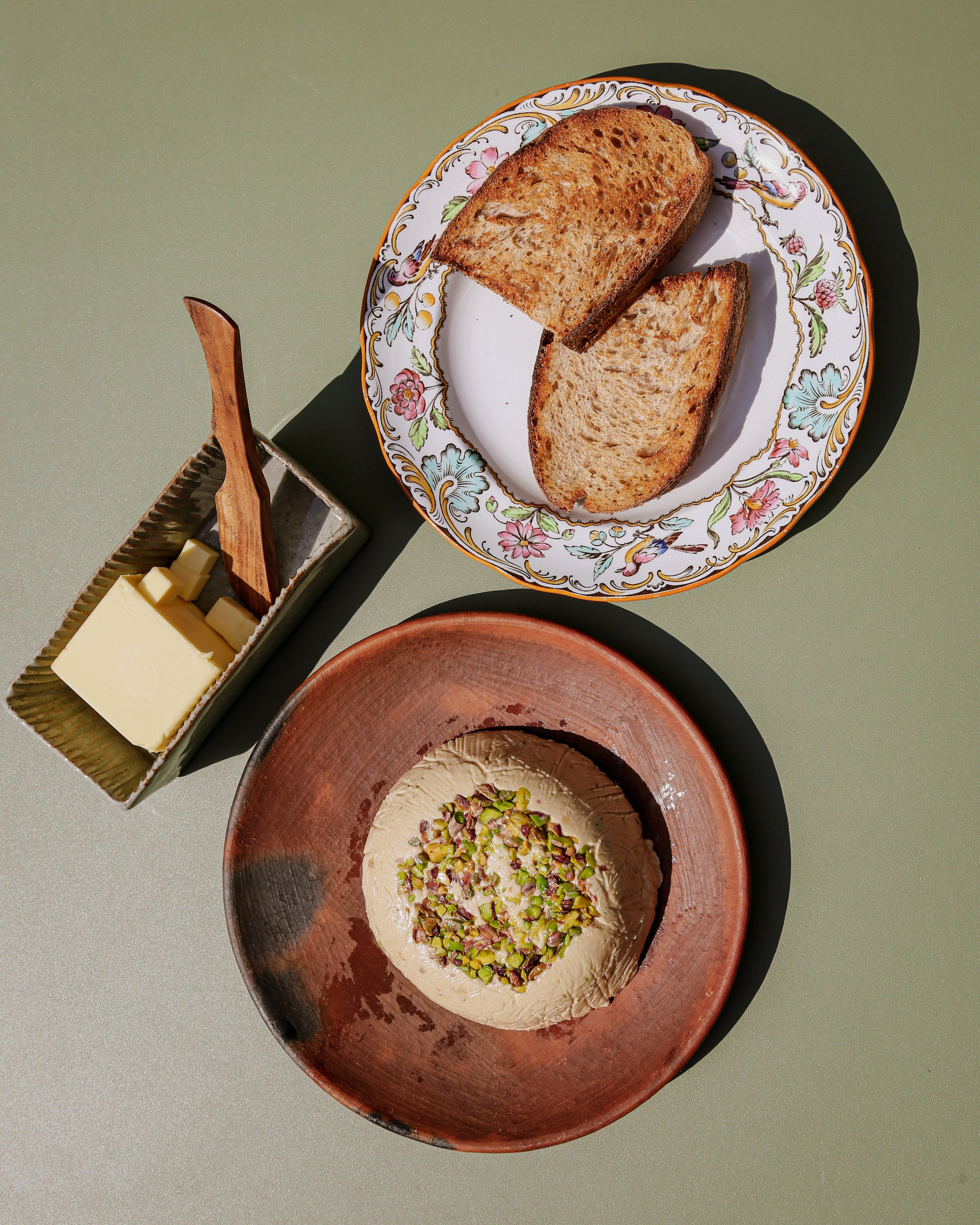
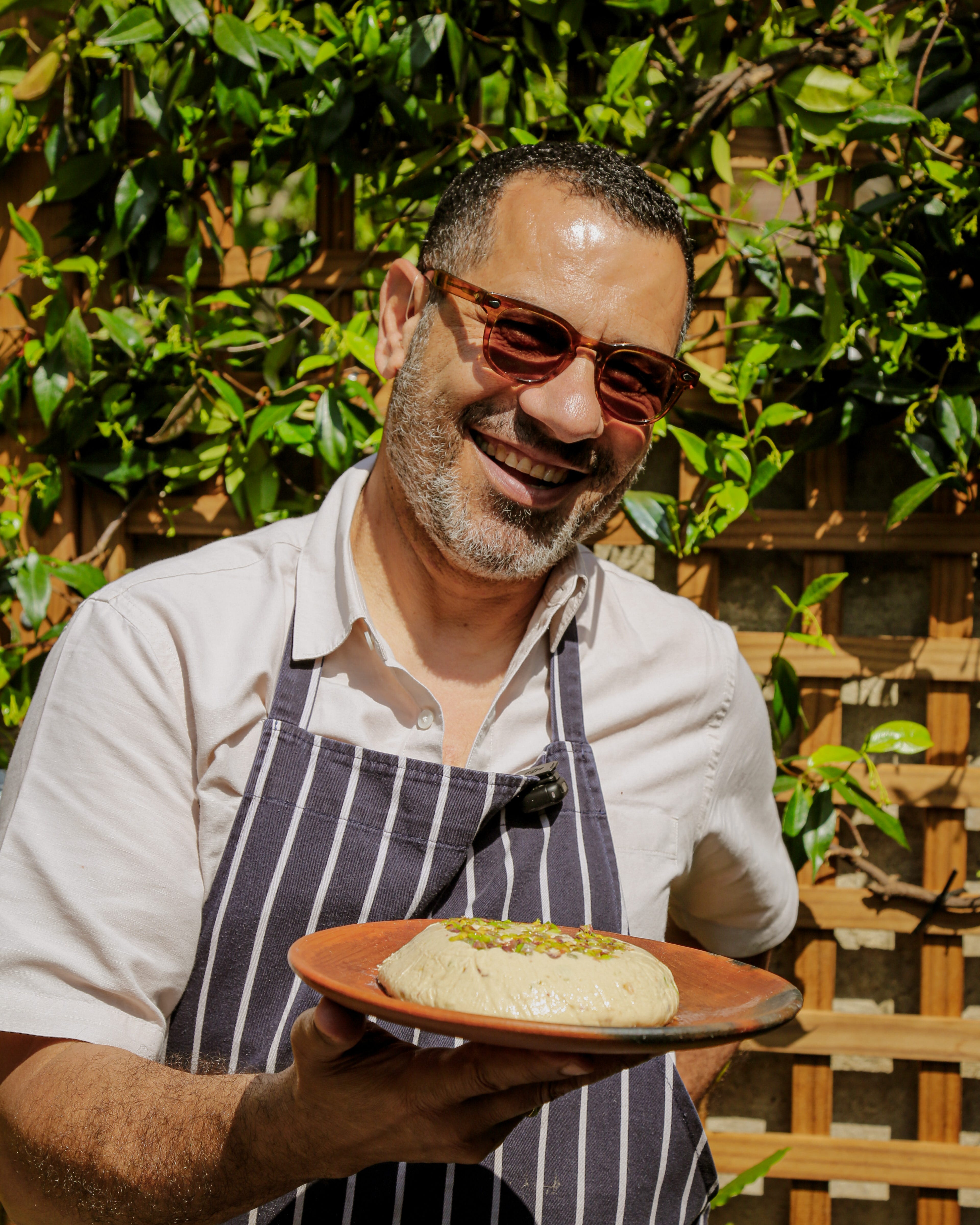
Icing sugar, milk powder, good tahini, a good pinch of salt, vanilla and a generous handful of roasted pistachios. You mix it by hand until it comes together like a soft dough, press it into a bowl lined with cling film, and leave it in the fridge overnight. The next morning you have something that looks and tastes like proper halva, ready to be sliced and eaten with toasted sourdough and butter, or spread on the cardamom pancakes from Boustany, or simply broken off in pieces with strong coffee at the end of a meal.
It takes about fifteen minutes of work. Nothing can really go wrong.
Yet, the halva I grew up with was something else entirely
When I was a boy, halva was one of the small luxuries that a child could afford. A few coins would get you a piece, cut from the slab with the large knife, wrapped in a piece of paper. You would eat it slowly, because if you were too fast it would disappear too quickly. And you wanted to enjoy it for as long as possible. The taste was deeply sesame, mildly sweet, with a fine crumble that broke against the roof of your mouth.
We ate halva for breakfast sometimes, with bread and butter and a glass of strong tea. We ate it at the end of meals, with coffee and a few dates. It appeared at weddings. It appeared at funerals. It was the kind of sweet that did not need an occasion but quietly belonged to all of them.
The real halva is made in a slow and slightly mysterious process involving cooked sugar, whipped tahini and a feel for correct temperature that the people who make it had absorbed from their fathers and grandfathers. The best of it comes from Nablus, which has been the halva capital of Palestine for as long as anyone can remember, a city whose name is so bound up with this sweet that halaweh Nabulsiyeh is its own category, recognised wherever Palestinians live. It comes in great slabs, plain, marbled or studded with nuts, and was sold by weight, cut from the slab with a large cleaver, weighed on a sheet of paper, wrapped and handed over with no ceremony at all
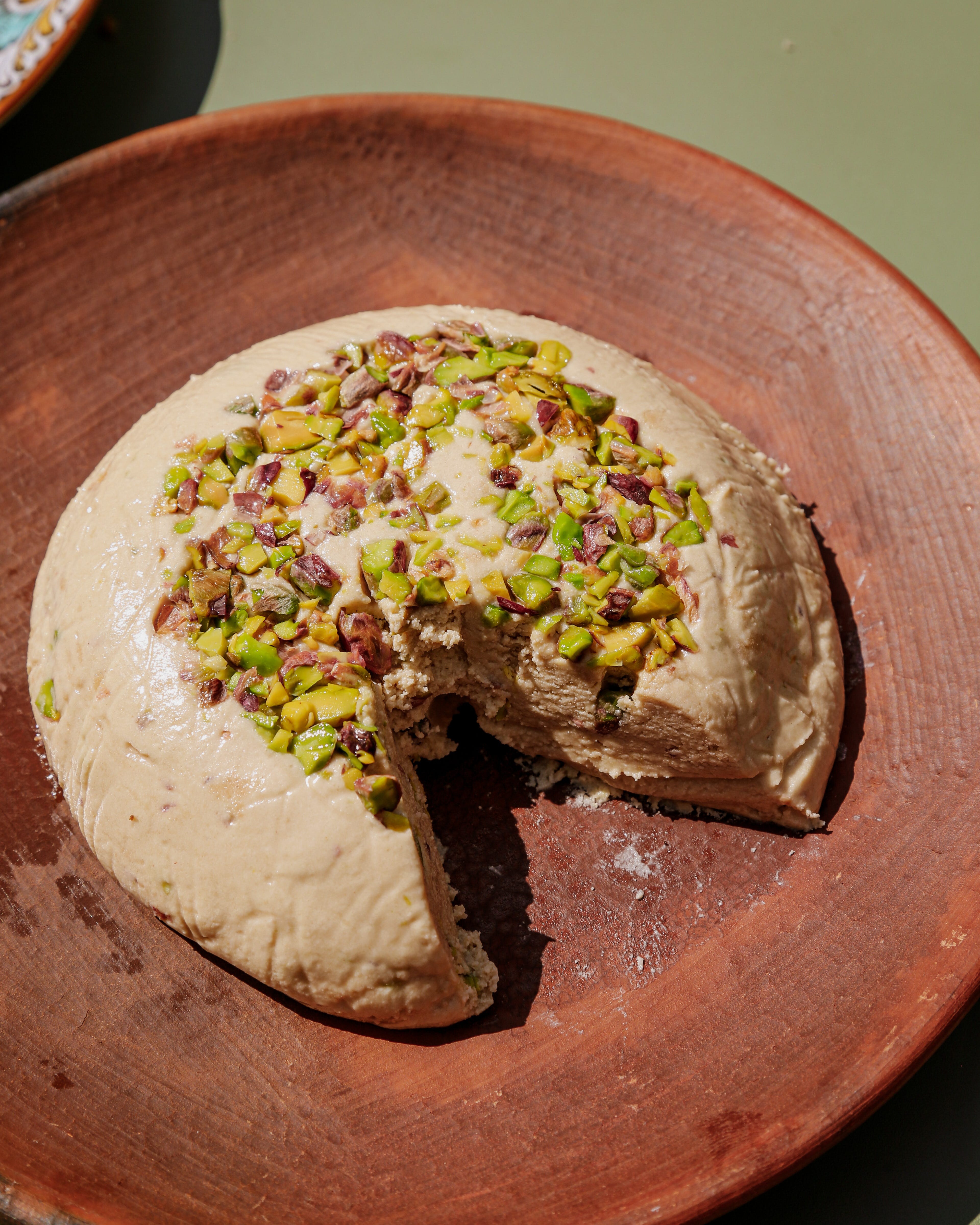
What I have made here is a domestic version, a cheat’s halva. The icing sugar replaces the cooked syrup. You do not need a thermometer. The milk powder gives it body and that particular soft, slightly crumbly texture. No whipping needed here. You just mix until it comes together, press it into a shape, and wait.
I am sometimes asked whether shortcuts like this one are a kind of betrayal of the original. They are not. They are a different thing. It is a halva you can make on a Tuesday evening when you want something sweet without committing yourself to half a day in the kitchen. The flavour is there. The texture is there. The pleasure is there. That, in the end, is what matters.
But the single ingredient that makes or breaks this recipe is the tahini.
Halva, fundamentally, is set tahini. Sesame paste that has been mixed with sugar in such a way that the whole thing holds together as a soft, sliceable block. There is no other major flavour in here, which means the tahini you use matters as much as when making hummus. Cheap, bitter, claggy tahini will make a cheap, bitter, claggy halva. Good tahini, properly milled, with a clean nutty flavour and a smooth, pourable consistency will make a halva that you will be proud of.
When buying tahini for this, look for one that pours rather than sits in the jar like cement. Give it a stir before you measure it; the oil should be fully reincorporated. Palestinian and Lebanese tahini brands are usually safe bets. If you can, by some miracle, find Nablusi tahini, made from the white sesame seeds grown in the hills around the city, you are in the best possible hands. It is, in my view, the finest sesame paste in the world and it tastes of the place it comes from.
Don’t buy the own-brand supermarket one. This is one of those rare recipes where buying the better ingredient is the whole story. Spend a few extra pounds. You will taste the difference in every bite.
After almost forty years of cooking, one of the things I have come to trust is the instinct of knowing when to do the long version of something and when to do the short. To know which corners can be cut and which cannot. To stop apologising for the easy version when the easy version is genuinely good. This recipe is my offering in that spirit: a sweet you can make tonight, eat tomorrow, and share with the people you love, without it asking anything more of you than fifteen minutes and a willingness to trust your hands.
Now, yalla, let’s make halva.
RECIPE: Easy pistachio halva
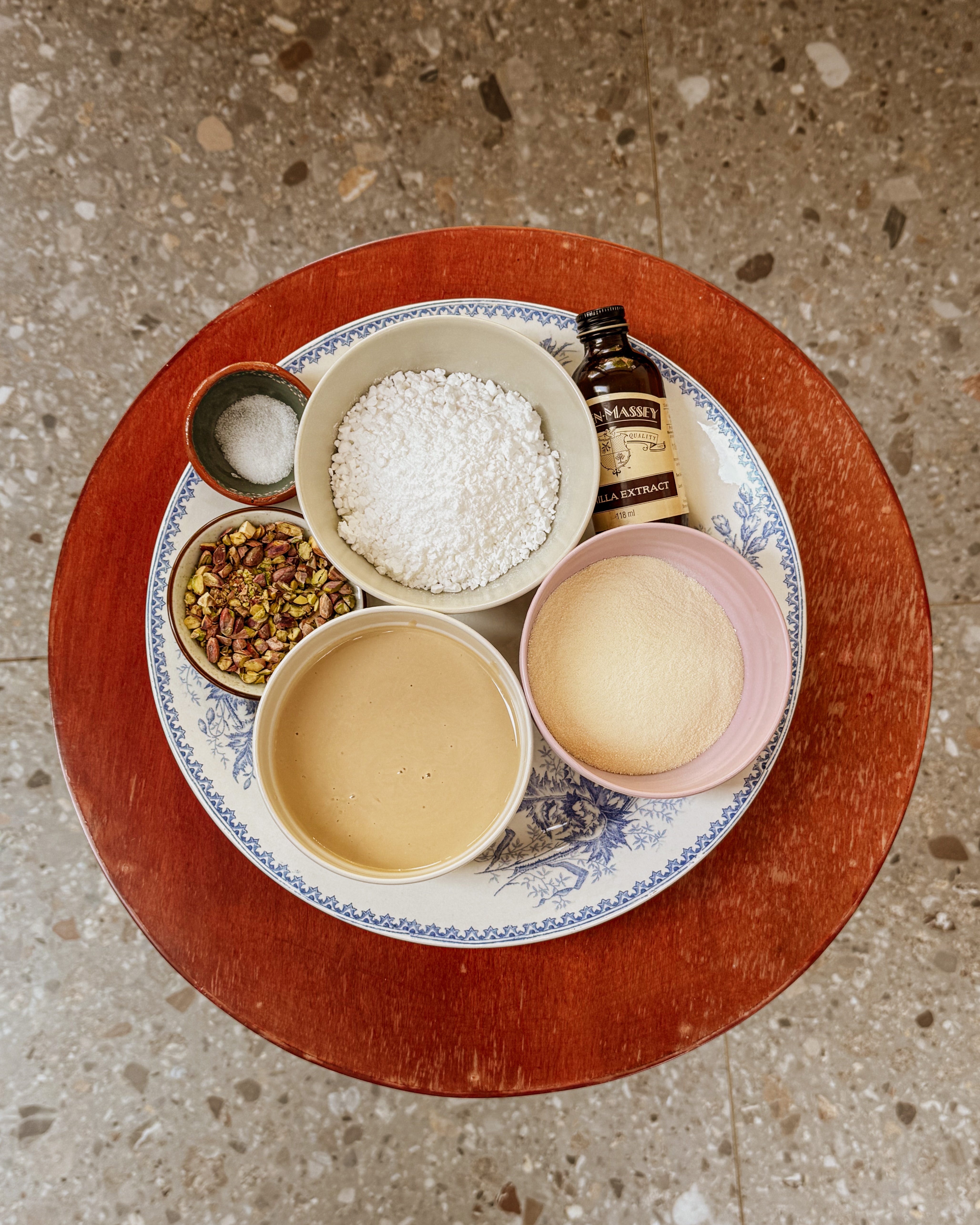
INGREDIENTS
120g icing sugar
100g milk powder
230-250g tahini
½ tsp salt
30g pistachio kernels
1 tsp vanilla extract
METHOD
Preheat the oven to 175C.
Place the pistachio kernels on an oven dish lined with parchment and roast for 10 minutes. Remove from the oven and allow to cool down completely before roughly shopping them, then set aside.
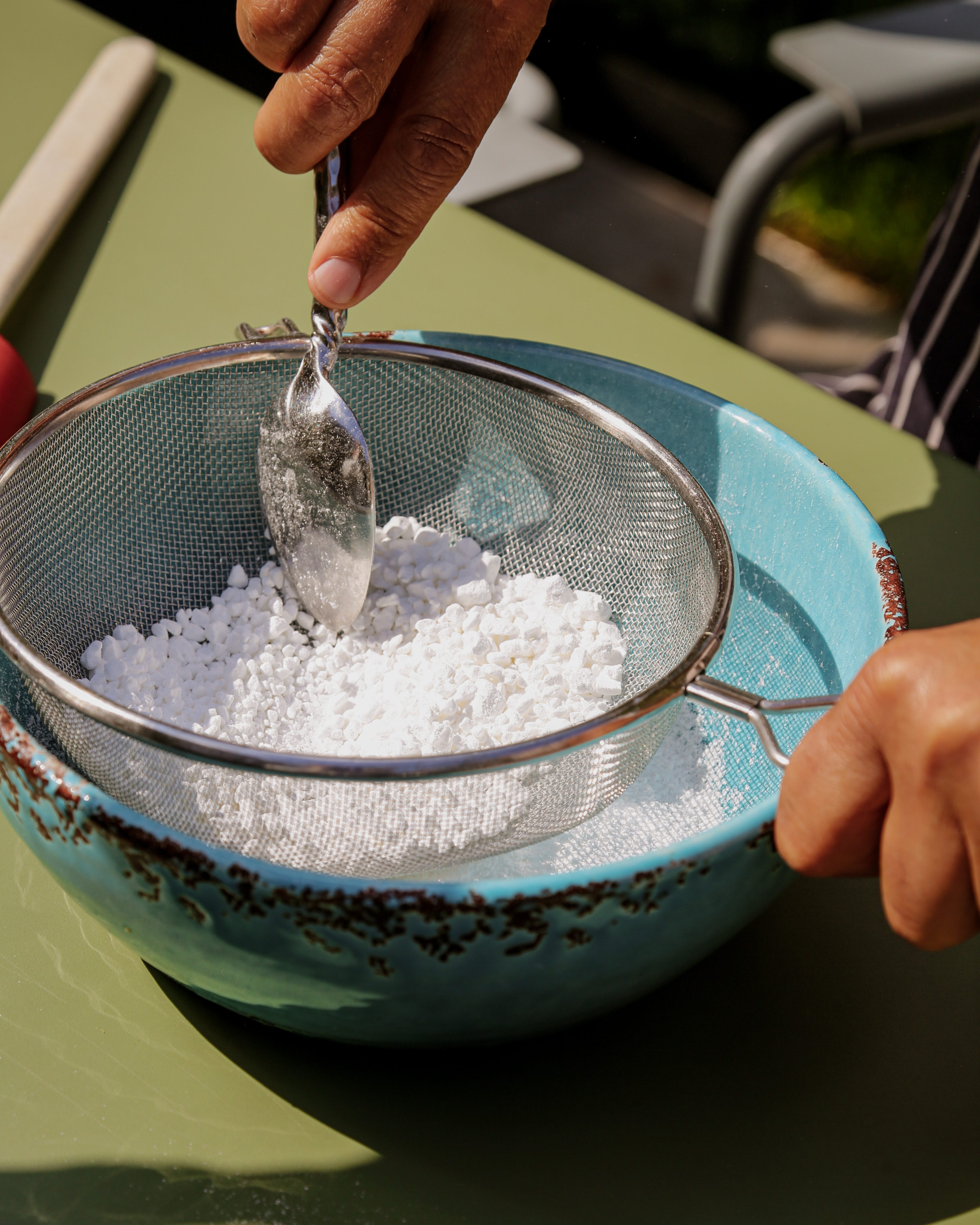
Sift the icing sugar, milk powder and salt into a medium bowl. Add the tahini and mix well, using a spatula until combined. Now, with your hand, continue to mix until the mixture resembles an elastic dough. Mix in the vanilla and ¾ of the pistachio and mix again.
Line a soup bowl with clingfilm, making sure the clingfilm hangs and overlaps on the sides. Sprinkle the remaining pistachio at the bottom of the bowl. Pack the halva mixture into the bowl, pressing gently with your fingers. Fold on the edges of the clingfilm over and store in the fridge overnight.
Serve the halva with toasted bread and butter or you can make the cardamom pancakes from my book Boustany.
I was thinking of halva just this morning. I think this is a sign I need to make this. I have the ingredients on hand too!
This looks amazing